Is High Return Enough? What Institutional Investors Should Really Be Asking
High returns alone may not be sufficient. The real question is how well this structure aligns with your company's actual needs.
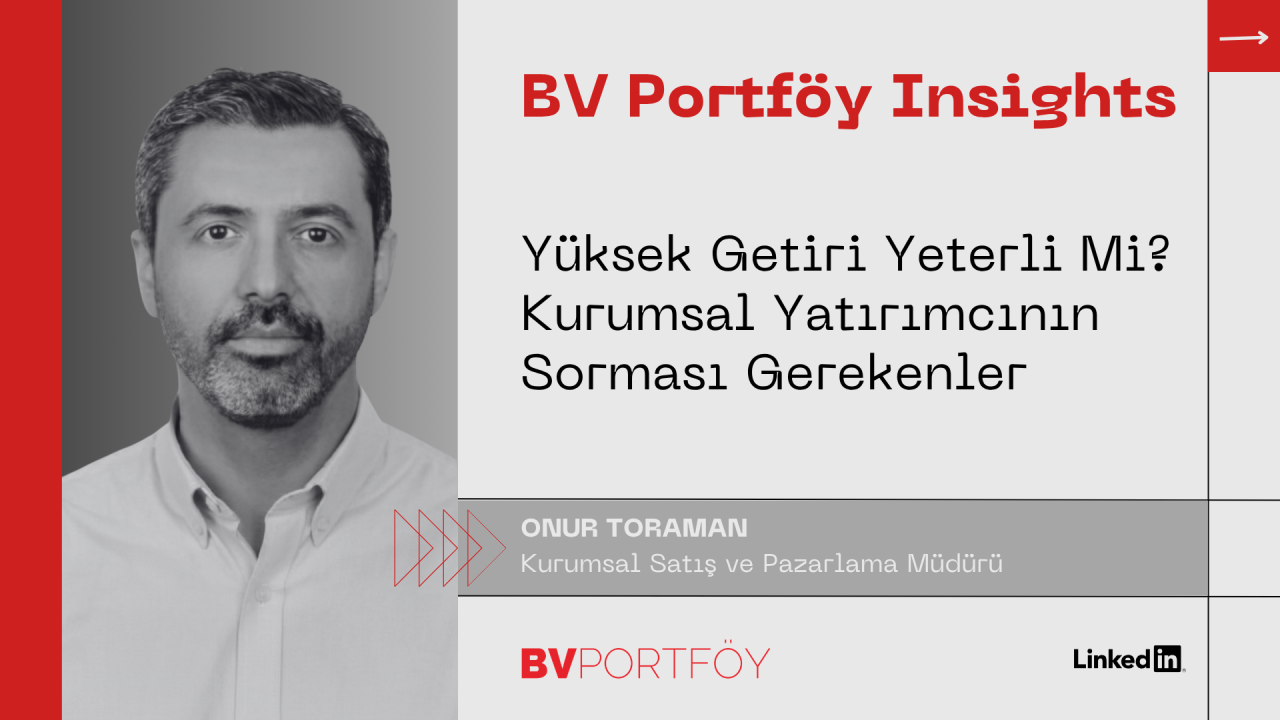
High returns alone may not be sufficient. The real question is how well this structure aligns with your company's actual needs.
The investment fund landscape has expanded significantly in recent years, both in depth and diversity. Yet from an institutional investor's perspective, this expansion doesn't always translate equally. Much of the content circulating on social media is aimed at individual investors. But for a company's CFO or treasury manager, the questions tend to start from a very different place.
How well does this fund actually address our real needs?
Drawing on examples from the field, this piece aims to offer a framework for thinking through questions we encounter more frequently today.
1. Sometimes Risk Is Carried Without Being Noticed
In conversations with many institutions, a familiar opening line comes up: "We don't take active positions."
Most of the time, that's true. But it's often an incomplete picture. Balance sheet structure, cash flows, and the currency distribution of liabilities already create a degree of risk exposure in most cases — one that typically only becomes visible when a market move occurs.
The critical point here isn't forecasting. It's gaining a clearer, shared view of the current situation.
Some institutions catch this awareness early and build a more balanced structure. Others only revisit it after seeing the results.
At this stage, we observe that some institutions are beginning to evaluate different fund structures to offset this exposure — and the impact of such instruments tends to be directly tied to how clearly the current position has been defined.
2. Holding TRY vs. Managing TRY
For many institutions operating in Turkey, carrying a TRY balance sheet isn't a choice — it's often a necessity. But a small yet important distinction emerges here: holding TRY and managing TRY are not the same thing.
Deposits remain a natural and familiar solution for most institutions. Over time, however, certain questions tend to surface more frequently: how well deposits align with cash flow, what level of flexibility they offer, and whether alternative instruments have been sufficiently considered.
We observe that these questions have gradually led some institutions toward different instruments. Particularly in structures where liquidity and flexibility are priorities, fund solutions beyond deposits are increasingly entering the conversation.
3. Liquidity: Not a Technical Concept — An Operational Reality
Liquidity is often treated as a technical term, but on the institutional side, it has a very practical dimension. Payments, collections, unexpected needs — this is why liquidity means not just "being able to exit," but accessing funds at the right time and in the right way.
Transaction hours, settlement structures, and access conditions are becoming increasingly important in fund selection for this reason. A product initially chosen for its yield can later be reassessed from a liquidity standpoint. This is why these operational parameters are playing an increasingly decisive role in fund selection.
4. Tax Efficiency: A Layer That Makes a Difference Over Time
While it may not stand out at first glance, tax structure can create meaningful differences over time. Equity-heavy funds, hedge funds, and longer-term alternative structures each offer different advantages depending on the need. Institutions that have reached a certain scale are increasingly approaching this topic more systematically.
Here too, it's not a standalone preference — it's one layer evaluated alongside all other parameters.
5. Manager and Process: The Real Question Behind the Result
Performance is usually the first thing examined in fund selection. But over time, the questions shift. How was that performance generated? How sustainable is the process? Is the structure truly institutionalized?
We observe that these questions are arising more frequently in recent years. For some institutions, what matters now is not just the outcome — but how that outcome was achieved.
6. Custody and Transparency: The Infrastructure in the Background
The strong custody infrastructure underlying fund structures in Turkey provides an important confidence layer for institutional investors. Yet this topic is rarely examined in detail. Still, it is possible to observe some institutions actively incorporating it into their evaluation processes. Transparent reporting and regular communication are also complementary elements of this structure.
7. Product or Approach?
Perhaps the most significant shift in perspective over time emerges here. For institutional investors, the question is often not simply about accessing a product — it's about working with a structure that genuinely understands their needs.
At this point, a few questions come to the fore:
- How well does the counterpart understand the company's dynamics?
- How proactively does communication flow?
- How need-driven are the recommendations?
The answers to these questions largely determine long-term partnerships. In fact, most long-term collaborations take shape in those first conversations where these questions are genuinely addressed.
The Right Answers Begin with the Right Questions
For institutional investors, fund selection rarely comes down to a single criterion. Risk, liquidity, balance sheet structure, and flexibility are evaluated together — and the process often moves forward alongside new questions.
Institutions that address these topics systematically tend to build more balanced and sustainable structures over time. Perhaps that's exactly where the difference begins: not searching for the right fund, but starting to ask the right questions.
Discover Trending Funds



Apply now to start
smart investing
We will get in touch with you ASAP!
We've received your request, and our team will be in touch with you shortly. Please stay tuned, and thank you!