Can the Cleantech Story Emerge from Türkiye?
For a long time in the climate agenda, we talked about targets. Net-zero commitments, emission reduction plans, sustainability reports, green transformation strategies... All of these were necessary. They still are. But now we're moving into another phase.
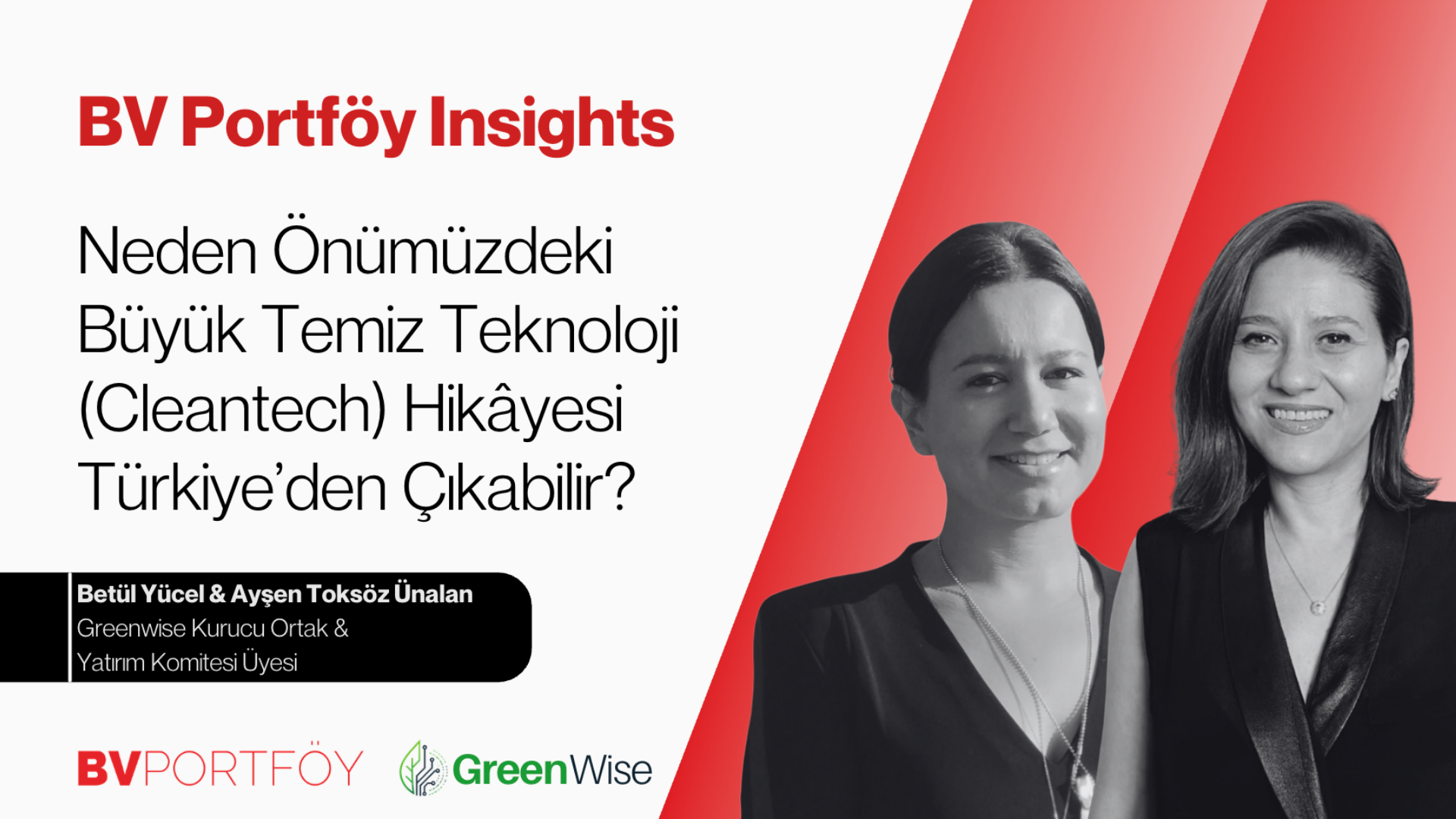
For a long time in the climate agenda, we talked about targets. Net-zero commitments, emission reduction plans, sustainability reports, green transformation strategies... All of these were necessary. They still are. But now we're moving into another phase. The biggest change we've seen in the last few months is this: investors are no longer looking for "climate technology," but for "AI-scalable climate technology."
Today's real question is this: Who will implement these targets, with which technology, with which capital, and at what speed?
Because the climate issue is no longer just a matter of vision. It's also a matter of implementation, investment, and competition. A cost matter for industry. A market access matter for exporters. A scaling matter for entrepreneurs. And for investors, a new area of value creation.
What does the data say?
According to the International Energy Agency's World Energy Investment 2025 report, global energy investments are expected to reach $3.3 trillion USD in 2025. Approximately $2.2 trillion of this is going to clean energy investments. This data tells us something clear: clean energy and clean technology are no longer a niche sustainability topic; they have become a major investment area at the center of capital, industrial policy, energy security, and competitiveness.
On the renewable energy side, the pace is also very high. According to IRENA data, 585 GW of renewable energy capacity was added in 2024, marking the highest annual increase to date. However, this pace alone is not enough. The new need of the energy transition is not just more capacity, but smarter grids, more efficient consumption, better storage, stronger data analytics, and more flexible systems.
The picture is the same on the venture capital side. According to Dealroom data, climate tech startups received $38.4 billion in investment in 2025. In the first five months of 2026, this area received $16.6 billion in investment. These figures show that the market is not exiting clean technology; rather, it is becoming more selective, more disciplined, and more implementation-focused.
Artificial intelligence: solution or new pressure?
At the same time, artificial intelligence is creating a new reality. AI is not just a supporting tool for clean technologies. It's one of the main axes making water, energy, carbon, waste, resource efficiency, and industrial transformation more measurable, more predictable, and more investable across the board.
However, AI itself is also creating new environmental pressure. According to IEA's Energy and AI study, data center electricity consumption is expected to rise to approximately 945 TWh by 2030. This consumption points to a scale comparable to the annual electricity consumption of many of today's major economies.
For this reason, AI is both part of the solution and a new sustainability question that needs to be solved. As the AI economy grows, clean energy, efficient cooling, water management, grid flexibility, waste heat utilization, and carbon reduction will become more strategic.
The most notable clean technology startups of the coming period will be those who read this tension correctly. That is, those who can use AI not merely as a technology that consumes more energy, but as a solution mechanism that can reduce more than it consumes, will stand out.
AI will be the new electricity of cleantech.
Clean technology is no longer just emission reduction
Today we're seeing the first examples of this transformation in the world. Carbon accounting is ceasing to be just an annual reporting task; it's turning into supply chain and product-based decision intelligence. AI-powered cooling solutions aimed at reducing energy consumption in data centers are developing rapidly. Technologies that convert industrial waste streams back into valuable inputs are opening new investment areas. In water management, there's a shift from systems that detect losses after they occur to structures that predict losses before they happen.
The common point of these examples is this: clean technology is no longer just an "emission-reducing" topic. It's an investment area that works with data, reduces costs, decreases resource dependency, manages regulatory risk, and can create new revenue models.
Regulations are also pushing implementation
This transformation is accelerating not only through global capital flows but also through regulations. The definitive period of the European Union's Carbon Border Adjustment Mechanism began in 2026. This is making carbon data, product-based emission calculations, low-carbon production, and clean technology investments part of competition for sectors exporting from Turkey to the EU.
There's a similar shift in direction in Turkey as well. The Climate Law, which entered into force in 2025, established the legal basis for a national emissions trading system. This development is taking carbon management out of being merely a voluntary sustainability issue and placing it on companies' finance, operations, and competition agenda.
Which gap is GreenWise focusing on?
Within this picture, GreenWise is positioning itself to respond to the needs of the new era. At the core of the approach of the GreenWise AI-Enabled Cleantech Impact Venture Capital Investment Fund, developed under the Boğaziçi Ventures umbrella, is this idea: artificial intelligence is not a separate sector; it's a horizontal intelligence layer that accelerates the scaling of clean technologies.
For this reason, GreenWise's focus is not just startups that "use AI." The real focus is companies that can place AI at the center of the clean technology solution; that can turn data into performance, performance into impact, and impact into investable growth.
Let's think of a water technology. If it only provides water savings, it's valuable. But if the same technology can predict losses with AI, analyze consumption patterns, indicate maintenance needs in advance, and scale across different facilities, then it's no longer just a water solution. It's a data-driven resource efficiency platform.
Let's think of a carbon management tool. If it only does reporting, it's useful. But if it can read supply chain data, calculate product-based emissions, guide investment decisions, and facilitate compliance with regulations like CBAM, then it's no longer just compliance software. It's decision-support infrastructure for industry.
Let's think of an energy optimization startup. If it only reduces consumption, it's important. But if it reads production, storage, grid, price, and operations data together and continuously improves low-carbon performance, then it's no longer just an efficiency tool. It's a new operating model.
Let's think of a circular economy solution. If it only reduces waste, it's meaningful. But if it can read waste streams with data, increase resource efficiency, create new raw material inputs, and provide cost advantages, then it's no longer just an environmental solution. It's an industrial competitiveness tool.
Turkey's COP31 momentum
This topic is especially important for Turkey. COP31 being held in Antalya on November 9-20, 2026, doesn't just give Turkey diplomatic visibility. It also sends a strong market signal. A special window of time is opening for Turkey to build a more ambitious story in clean technology, industrial transformation, green financing, and AI-supported sustainability.
This story has a foundation. Turkey has a strong industrial infrastructure. Exporting sectors now see low-carbon production not as a choice but as a competitive condition, due to CBAM and similar regulations. The entrepreneurship ecosystem is developing. Engineering capacity is high. Green financing channels are expanding. COP31 opens an international window that will make this transformation visible.
COP31 will not be Turkey's Davos. It could be Turkey's first true Climate Capital Week.
However, there's still a critical gap here. Clean technology startups don't just need grants or project support; they need capital that can take early-stage risk, has domain knowledge, can conduct technical evaluation, and can turn a startup into a scalable investment story.
What questions should we ask when investing?
For us, clean technology is not just a well-intentioned sustainability topic. It's a real investment area. And that's why, when we invest, we don't just evaluate the technology.
We ask these four questions: Does this technology solve a real problem and is it scalable? Does AI make this solution smarter or more investable? Is regulation a risk or an accelerator? Is there a chance to expand from Turkey into a regional or global market?
Because the clean technology startups that will succeed in the new era won't just be the ones that reduce carbon. They'll also be the ones that reduce cost, improve resource use, generate data, manage regulatory risk, and provide direct business value to their customers.
That's why we don't see impact as just a separate filter. Impact is the result that emerges when the right technology, the right market, the right capital, and the right implementation come together.
AI offers a strong leverage here. But it's not enough on its own. Algorithms can read data, model risk, and increase efficiency. But questions like which growth is responsible, which trade-offs are acceptable, and what social and environmental consequences the technology will produce still require human judgment, governance, and leadership.
This is the standard GreenWise cares about: evaluating technology, capital, impact, and governance on the same ground.
Turkey's COP31 momentum is therefore not just a calendar opportunity. It's a strong call to move clean technologies out of conversation and into implementation, entrepreneurship, investment, and export potential.
Sustainability leadership in the new era will not come only from those who report progress. Real leadership will come from those who build the systems that make progress measurable, scalable, and investable.
As Boğaziçi Ventures, the startups we've evaluated so far have shown us three recurring patterns at the intersection of AI and cleantech. First, the truly disruptive ones; technologies that redefine the existing system rather than improve it. Second, those with clear scaling potential; teams that have embedded the move from pilot stage to market into their business model. Third, teams with a global mindset: founders who develop in Turkey but plan to sell to the world from the outset, capable of turning a regional problem into a global opportunity.
GreenWise is an early position for this future. A strategic step taken to turn clean technologies into implemented solutions, not just narrated ones, on Turkey's COP31 journey.
Data Sources
The primary data and policy references in this article are based on the following sources:
International Energy Agency (IEA), World Energy Investment 2025
International Energy Agency (IEA), Energy and AI
International Renewable Energy Agency (IRENA), Renewable Capacity Highlights 2025
European Commission, Carbon Border Adjustment Mechanism (CBAM)
European Commission, CBAM entered into force on 1 January 2026
Türkiye Directorate of Climate Change, Climate Law / ETS information
Discover Trending Funds



Apply now to start
smart investing
We will get in touch with you ASAP!
We've received your request, and our team will be in touch with you shortly. Please stay tuned, and thank you!